
What if your brain deceived you daily and you never noticed?
Hello readers! Have you ever tried to squish someone’s head from a distance using just your fingers? Somehow, it looks like their head fits perfectly between them. It’s totally harmless and even hilarious when the person puts on a goofy face. This playful trick is possible because optical illusions always find a way to sneak into our daily lives—shadows, perception shifts, wet roads, and so much more. Even if we do not realize them, they are actually everywhere, constantly changing how we perceive the world around us. Take a break to look around, our eyes can be easily tricked. That’s what makes it more intriguing. How about next time you try to squish someone’s head, smile, and remember that your brain is just playing along with the illusion?
One classic example can be seen on the road: when you look through a car window, you may have seen the wheels of other cars moving backward or forward despite the car moving in the opposite direction. This is because of the illusion called the Stroboscopic Effect. This appears when the wheels of a car spin at a certain speed, and how your eyes and the camera capture the movement makes it look as if the wheel is moving the other way around or appears to be completely still. The reason why this happens is that your brain tries to make sense of the rapid movement, attempting to catch the spinning of the wheels in short frames.
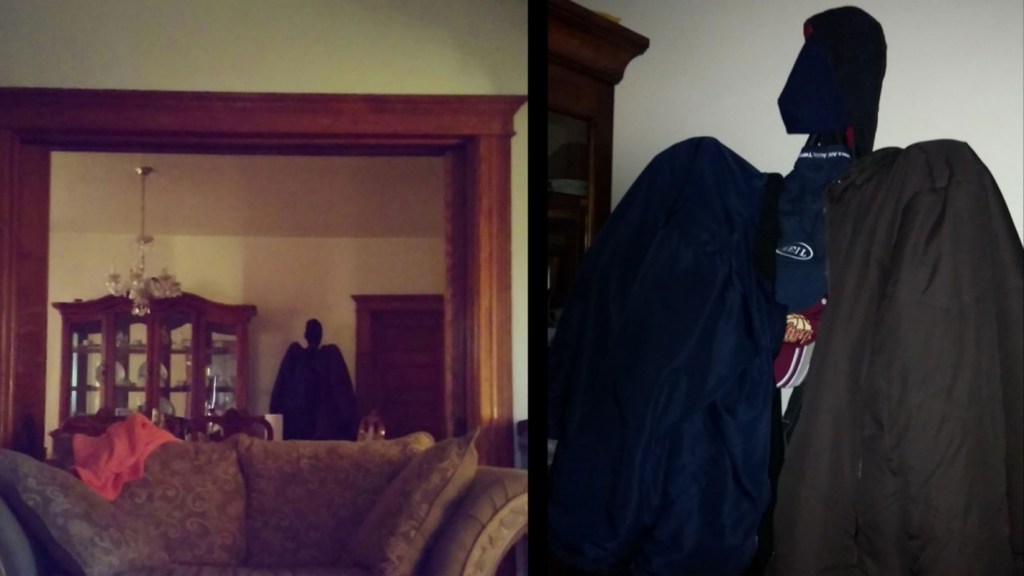
Another illusion your brain creates is the Pareidolia Effect. The clothes you see at night as a stranger. Your room is dim, a jacket hanging on the wall, and the shadow is looking at you. It is just your brain trying to accommodate the way your clothes lay, recognizing it as a person, giving you a few minutes to think and realize it is only your laundry. It also occurs when heat causes light to bend. On sunny days, the road seems to curve and create mirages of water. When you get closer to the water, it will likely disappear. Your brain again tries to interpret the shiny reflection and confuse it with surfaces like water.

In the end, it’s obvious that our brain can send misleading signals, making us see things differently. Our perceptions are built on the illusions we form without our conscious. It blends into our life, shaping it and serving us our world experience. For those who like to see how optical illusions work, I would like to recommend a game called “Superliminal”. Have fun while spotting the tricks of your brain!
References:
Wagon-wheel effect Wikipedia, Pareidolia: the science behind seeing faces in everyday objects, Why the brain is programmed to see faces in everyday objects- UNSW, Hot road Mirage – Harvard Natural Science Lecture Demonstration, Superliminal on steam.

