Mankind makes the best use of the resources the world has to offer and continues to utilize these resources in different areas every day. But how much do we know about the natural beauties of this world, whose resources we have such a command of?
The Namib Desert in South Africa, officially known as the Namib Sand Sea, offers unique landscapes to mankind with its high sand dunes and shores stretching to the ocean. This desert, which usually draws attention with temperatures ranging between 50 and 60 degrees Celsius, is considered the oldest desert in the world, with a history of 55 million years. The dense fog formed by the combination of cold water carried by the Benguela Current and humid and hot air is a vital source of life for the desert.
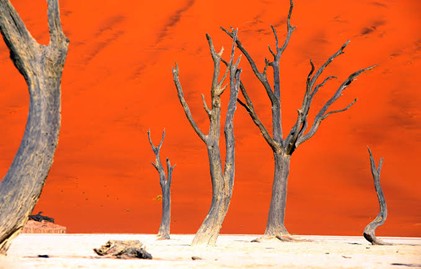
In Deadvlei, one of the touristic regions of the desert, clay pans are located between the sand dunes. Dead camel-thorn trees, which have dried before they rotted due to the intense sun and low humidity in the region, combine with the clay floor to create an almost frightening but fascinating sight. Although living conditions in the desert are limited, this region is home to many endemic animal and plant species. However, vegetation in the desert is very scarce. In addition to the scarcity of vegetation, plants are spread over a wide area, so living things must be constantly on the move to survive. The angry sands in the desert also create a problem for reptiles. Despite these adverse conditions, the desert is their home, and there is still hope for them. With all these unique features, the Namib Desert has been designated as a UNESCO World Heritage Site since 2013.