
Sylvia Plath remains one of the most haunting and influential figures of 20th-century literature. Through her confessional poetry and semi-autobiographical novel The Bell Jar, she laid bare the labyrinth of her inner turmoil, becoming a pioneer of the “confessional poetry” movement. Though her life ended tragically at the age of 30, her works continue to resonate deeply with readers and critics alike.
The Father Complex: Trauma Shaping Art
A recurring theme in Plath’s work is the trauma stemming from the death of her father, Otto Plath, when she was eight. In her iconic poem “Daddy”, she conflates her father’s memory with that of a Nazi officer, channeling both rage and longing:
Daddy, I have had to kill you. / You died before I had time
This poem not only confronts her grief but also rebels against patriarchal authority and societal constraints.
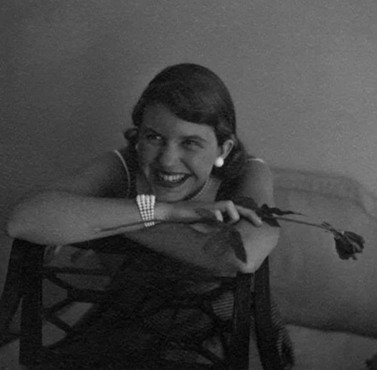
BBC Turkish. “Sylvia Plath: The Woman Who Illuminated Her Death with Her Poems.” (February 10, 2019). https://www.bbc.com/turkce/haberler-dunya-47197860
Tempestuous Marriage: Ted Hughes and Literary Fire
Plath’s 1956 marriage to poet Ted Hughes began as a passionate union but soon unraveled due to infidelity and emotional strife. Her dependency on Hughes permeates poems in Ariel (1965), her posthumously published masterpiece:
Ted, my savior… / I must live in his heat
Yet his betrayals deepened the despair in her writing. Ariel, with its raw intensity, is often hailed as her most visceral work.
The Bell Jar: Transforming Depression into Literature
Plath’s only novel, The Bell Jar (1963), offers a semi-autobiographical account of a young woman’s mental collapse. Protagonist Esther Greenwood’s electroshock therapy and suicide attempts mirror Plath’s struggles. The novel critiques 1950s gender roles and challenges societal perceptions of mental illness.
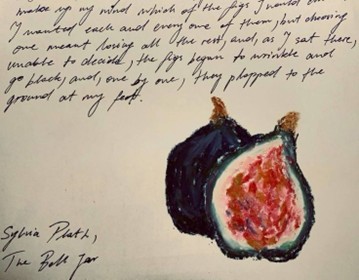
“I Saw My Life Branching Out” [Handwritten quote with fig illustration]. Pinterest, uploaded by Olimpia, https://pin.it/7Etm6EaxA. Accessed 22 Apr. 2025.
Suicide and Immortal Legacy
Plath’s suicide on February 11, 1963, left behind unfinished poems and diaries. Posthumous publications, particularly Ariel, cemented her literary immortality. In 1982, her Collected Poems won the Pulitzer Prize, making her the fourth posthumous recipient of the award.
Echoes in Turkish Literature: The Plath-Marmara Connection
Plath’s life and work profoundly influenced Turkish poet Nilgün Marmara, who wrote her thesis on Plath and shared a similarly tragic fate, dying by suicide at a young age. Plath’s works, including “The Bell Jar” and “Ariel”, remain widely read in Turkish translations, celebrated for their unflinching exploration of psychological anguish.

Smithsonian National Portrait Gallery. One Life: Sylvia Plath exhibition. https://npg.si.edu/exhibition/one-life-sylvia-plath
Sylvia Plath transformed personal agony into universal art, grappling with themes of death, identity, and oppression. Though her life was cut short, her words endure as a testament to the power of literature to transcend suffering.
References:

